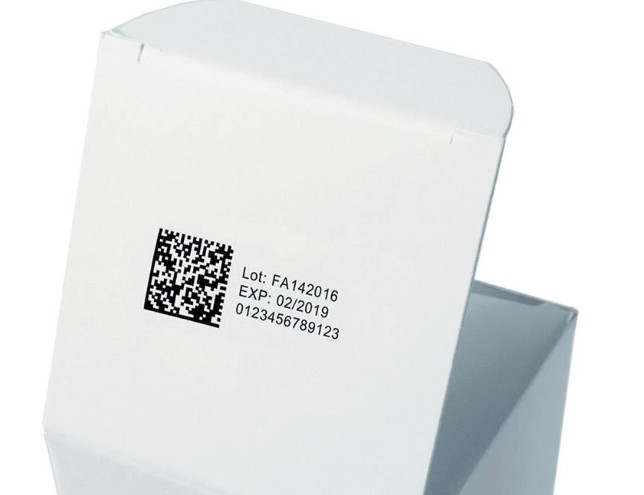

Industrial Thermal Inkjet printers are a dominant force in product identification and advanced manufacturing. They excel at printing high-quality, variable data directly onto products and packaging at high speeds, making them essential for traceability, compliance, and customization.
To provide a clear snapshot, here are their primary industrial applications across key sectors:
| Industry / Sector | Primary Industrial Applications |
|---|---|
| Food & Beverage | Printing expiration dates, batch codes, ingredients, and dynamic QR codes on cartons, plastics, glass, and aluminum cans. |
| Pharmaceutical & Medical | Serialized codes, expiry dates, and lot numbers on drug packaging for track-and-trace compliance. Advanced R&D for bio-ink deposition. |
| Personal Care & Cosmetics | Printing batch information and logos on packaging; enabling short-run and personalized packaging. |
| Electronics & Automotive | Marking traceable barcodes, serial numbers, and logos on components, circuit boards (PCBs), and cables. |
| Logistics & E-commerce | Printing shipping labels, variable address information, and tracking barcodes directly onto corrugated cartons and mailers. |
Key advantages:
High Resolution & Quality: Capable of printing up to 300-600 dpi, producing crisp text, detailed logos, and scannable barcodes.
Operational Efficiency: Modern TIJ printers are compact, easy to integrate into fast-moving production lines (often exceeding 100m/min), and require minimal maintenance compared to older technologies.
Versatility with Inks & Substrates: They can jet a wide range of inks (pigment, dye, solvent) and print on diverse materials like coated paper, various plastics, metals, and glass.